Safe drinking water is a basic need, yet many people face challenges with water quality. Reverse Osmosis (RO) water purifiers offer a reliable solution for removing impurities, harmful substances, and contaminants from water. In this article, we’ll explain how RO water purifiers work, their components, and their benefits, as well as address common questions about their maintenance and usage.
What Is Reverse Osmosis (RO)?
Reverse Osmosis is a water purification process that removes impurities by forcing water through a semi-permeable membrane. This membrane allows clean water to pass while blocking contaminants like dissolved salts, heavy metals, and harmful microorganisms.
At its core, RO works by applying pressure to push water against the natural flow of osmosis. The result is pure, safe, and great-tasting water ideal for drinking and cooking.
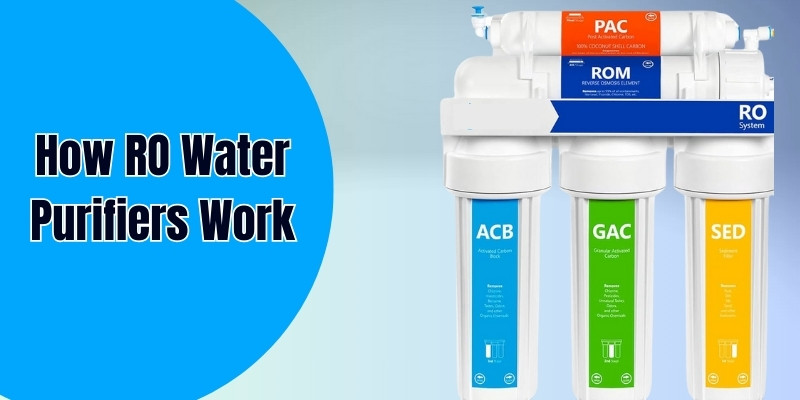
How RO Water Purifiers Work
RO water purifiers use a multi-stage filtration process to deliver clean water. Let’s break down each step:
1. Pre-Filtration
The pre-filtration stage includes sediment and carbon filters designed to remove large particles and chlorine. This step protects the RO membrane from damage and improves the efficiency of the system.
- Sediment Filter: Removes dirt, sand, and other visible particles.
- Carbon Filter: Absorbs chlorine, odors, and organic compounds that may affect the taste of water.
2. RO Membrane Filtration
The heart of the system is the RO membrane. It’s a thin, semi-permeable layer with microscopic pores (0.0001 microns). This membrane filters out:
- Heavy metals like lead and arsenic.
- Harmful chemicals, including nitrates and pesticides.
- Microorganisms like bacteria and viruses.
Only water molecules and essential gases can pass through, leaving impurities behind.
3. Post-Filtration
After passing through the RO membrane, water goes through another carbon filter. This step enhances the taste by removing any residual odors and fine particles.
4. Optional Mineralization
Some RO systems include a mineralization stage to add essential minerals like calcium and magnesium. This not only improves the taste but also restores some of the natural nutrients lost during the filtration process.
5. Storage and Dispensing
Purified water is stored in a tank and is ready for use. Modern RO purifiers come with taps or dispensers for convenience.
Components of an RO Water Purifier
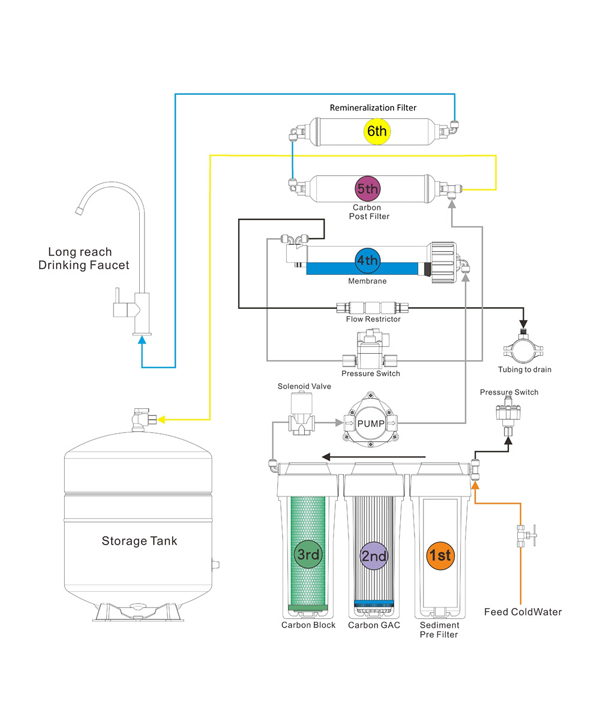
An RO water purifier consists of several key parts, each playing a specific role:
- RO Membrane: The primary filtration component.
- Sediment Filter: Protects the RO membrane by removing large particles.
- Carbon Filter: Eliminates chlorine and organic impurities.
- Booster Pump: Ensures adequate pressure for the filtration process.
- Storage Tank: Holds purified water for immediate use.
- Post-Carbon Filter: Refines water quality and taste.
- Faucet: Provides easy access to clean water.
Benefits of RO Water Purifiers

RO water purifiers offer several advantages, making them a popular choice for households and businesses:
- Removes Contaminants: Eliminates up to 99% of impurities, including heavy metals, chemicals, and bacteria.
- Improves Taste: Reduces unpleasant odors and enhances water flavor.
- Protects Health: Provides safe drinking water, reducing the risk of waterborne diseases.
- Versatile Applications: Suitable for homes, offices, and industries with high water purity requirements.
- Customizable: Additional features like UV sterilization and mineralization enhance functionality.
Limitations of RO Water Purifiers
While RO systems are highly effective, they come with a few drawbacks:
- Water Wastage: RO systems produce some wastewater during the purification process. Advanced models are designed to minimize this.
- Mineral Removal: Essential minerals are also removed. However, mineralization filters can address this issue.
- Maintenance: Regular filter replacement and servicing are needed to ensure optimal performance.
- Initial Cost: RO systems may have a higher upfront cost compared to basic water filters.
Who Should Use an RO Water Purifier?
RO water purifiers are ideal for:
- Areas with High TDS Levels: If your water source has high Total Dissolved Solids (TDS), an RO system is necessary to reduce it.
- Regions with Contamination: Places with heavy metals, pesticides, or industrial waste in the water supply.
- Households with Vulnerable Members: Ensures safe drinking water for infants, elderly people, and those with weakened immune systems.
- Industries Requiring Pure Water: RO systems are widely used in manufacturing, laboratories, and food processing.
Maintenance Tips for RO Water Purifiers
To keep your RO system working efficiently, follow these maintenance practices:
- Filter Replacement: Replace filters every 6–12 months, depending on usage and water quality.
- Tank Cleaning: Clean the storage tank regularly to prevent bacterial growth.
- Membrane Cleaning: Flush the RO membrane to remove accumulated impurities.
- Check Pressure Levels: Ensure the booster pump is functioning correctly.
- Annual Servicing: Hire a professional for a thorough system inspection and cleaning.
Measuring Water Quality
Understanding water quality helps you choose the right purifier and ensure its effectiveness. Common tools include:
- TDS Meter: Measures Total Dissolved Solids in water. Ideal levels for drinking water are below 300 ppm.
- pH Meter: Ensures the water’s pH is between 6.5 and 8.5 for safe consumption.
- Pressure Meter: Checks the input water pressure, ensuring optimal performance of the RO system.
Common Questions About RO Water Purifiers
How Much Water Does an RO Purifier Waste?
RO purifiers typically waste 3–4 liters of water for every liter of purified water. Newer models have improved efficiency and waste less water.
Can RO Purifiers Remove Bacteria?
Yes, the RO membrane filters out bacteria, viruses, and other harmful microorganisms, providing safe drinking water.
How Long Does an RO Membrane Last?
An RO membrane lasts 2–3 years with proper maintenance. Factors like water quality and usage affect its lifespan.
Why Choose RO Technology?
RO technology provides one of the most reliable solutions for water purification. Its multi-stage filtration ensures the removal of harmful contaminants while delivering water that is safe and tastes great. For those concerned about health and water quality, RO systems are a smart investment.
Clean water is essential for your well-being. Whether you’re looking to improve the taste of your drinking water, safeguard your family’s health, or meet specific industry requirements, understanding how RO water purifiers work can help you make an informed decision. Choose the right system, maintain it properly, and enjoy the benefits of clean, safe water every day.
Contact best water purifier company in Bangladesh for expert advice on choosing the best RO water purifier.
